


I first wrote about VNET with P14 Capital back in March, when the stock was around $10. Today it is closer to $6. Anyone who bought around then and held is down roughly 40%, which is obviously pretty shit.
This feels like a good time to remind everyone that none of this is financial advice.
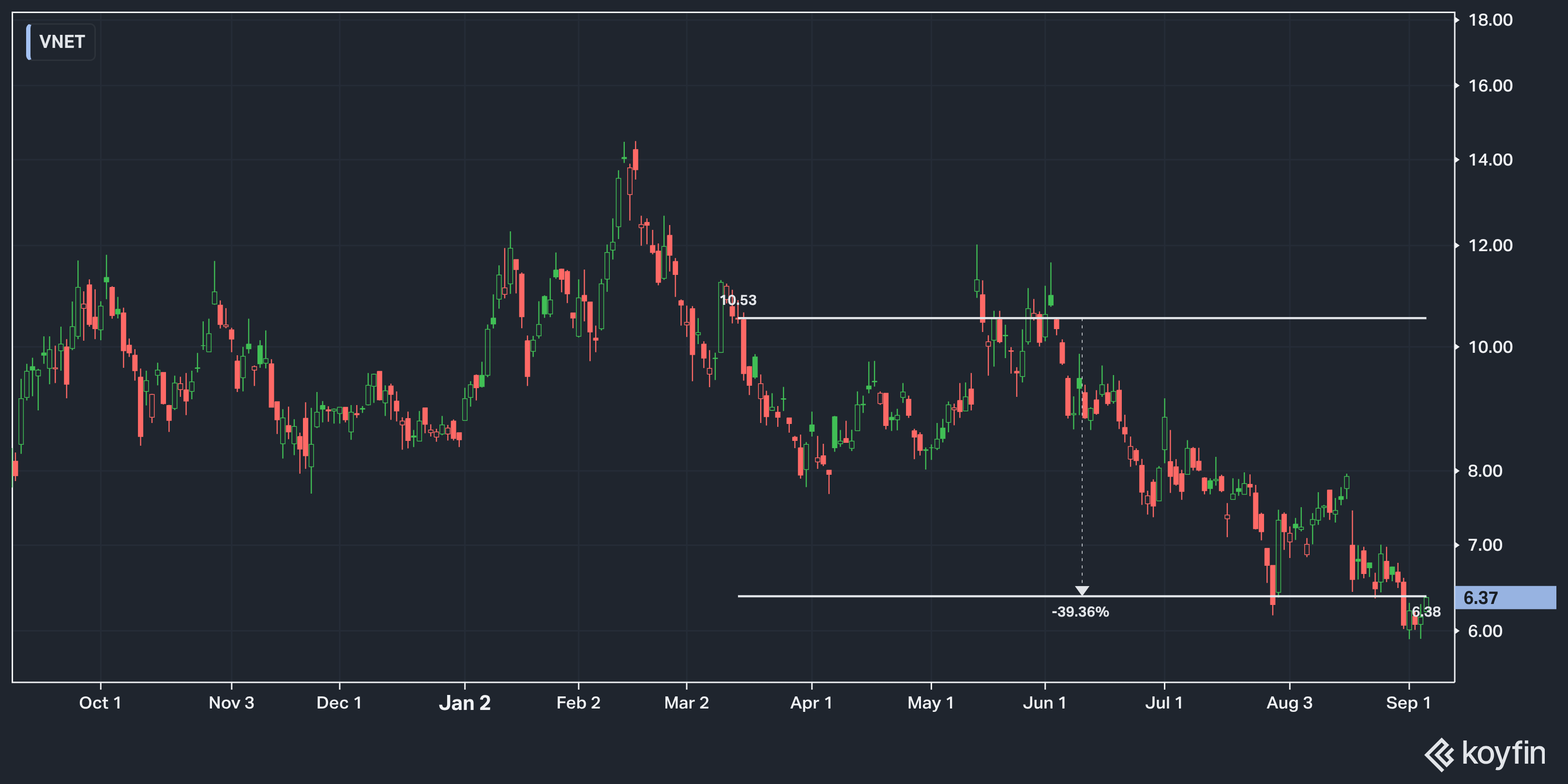
I did eventually buy some shares myself, then sold a couple of months later at a slight loss because I wanted fewer positions and more money in my best ideas. I’d love to tell you I saw this coming, but I just got lucky with the timing.
Anyway, I’ve kept following VNET, and the slightly awkward thing about revisiting it is that I still like the business. It builds and operates data centers in China, providing the space, power, cooling and connectivity that other companies need to run their servers.
I still think China is going to need a lot more compute capacity. VNET is winning orders, its wholesale business is growing, and customers are filling the data centers. There is quite a bit here that has gone the way we hoped.
So why has owning the stock been such a miserable experience?
Well, building all of this costs an absurd amount of money, and I’m increasingly focused on how much of the eventual upside actually reaches shareholders. You can be right about the demand and still underestimate what it costs to serve it.
I still think there’s a case for owning VNET. I just think this one requires a bit more work than I originally thought.
Demand still looks pretty good
The wholesale business did pretty much what we wanted it to do.
Wholesale revenue grew 58.1% in the first quarter and another 29.3% in the second. Adjusted EBITDA grew 30.6% and 25.4%, respectively. Wholesale also passed retail revenue for the first time, while Q2 adjusted EBITDA margin reached 33.0%, up from 30.1% last year.
Taken at face value, those are very decent numbers… The whole point of the original thesis was that wholesale would become large enough to change the earnings profile of the company. That is happening.
The order book is even crazier. VNET signed 862MW of wholesale orders in the first half and disclosed another 355MW of reservations. Add those together and VNET booked or reserved more capacity in six months than it currently has in service. Is demand the problem here? I really don’t see how.
But I am now more focused on the gap between committed and utilized capacity. At the end of June, VNET had 1,007MW in service and 970MW committed, but only 744MW utilized. That leaves roughly 226MW already built and committed where the customer has not fully moved in yet.
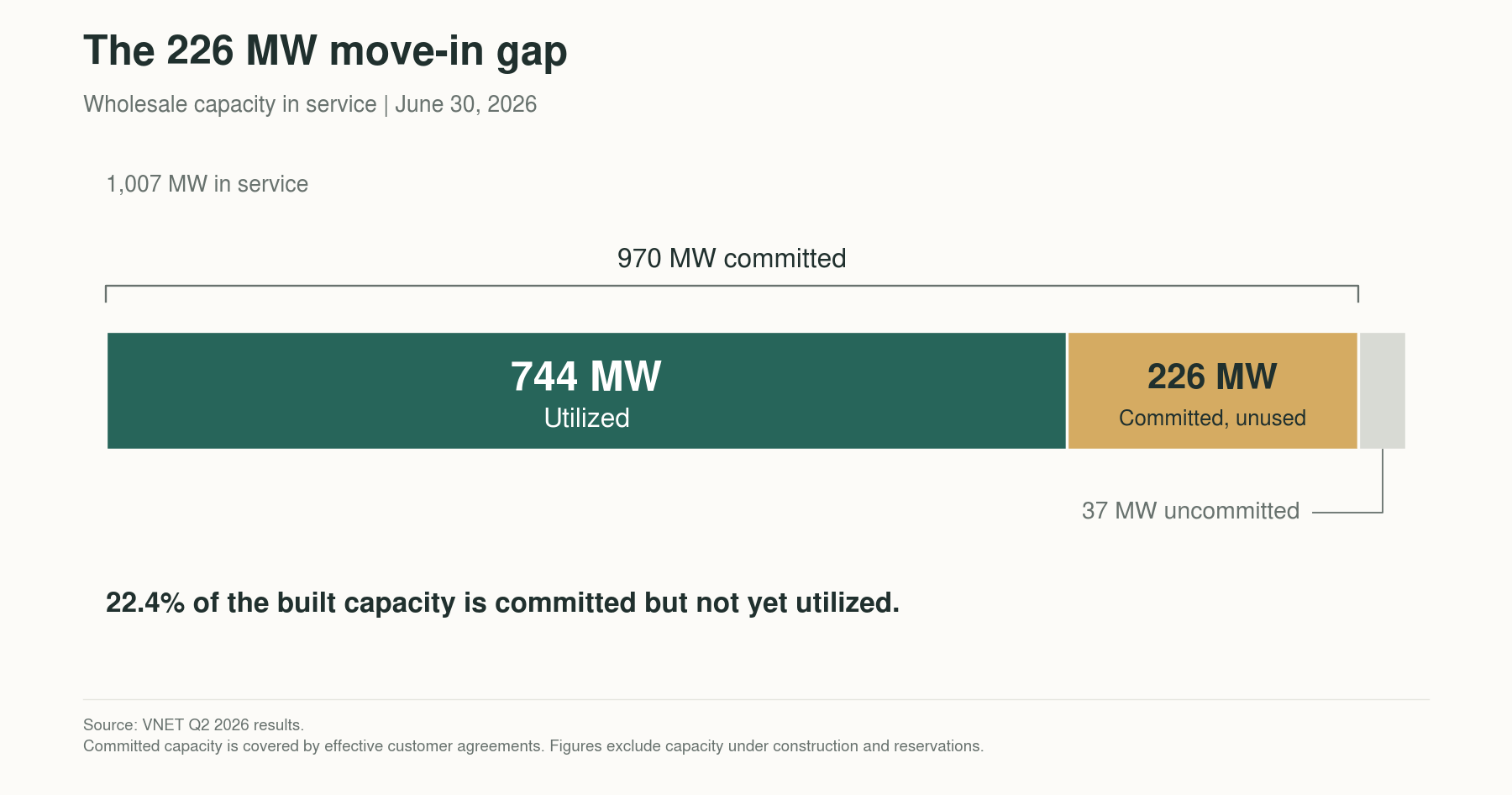
This is where I struggle a bit... Committed capacity is great. Reservations are great. Giant orders are obviously great. But VNET already spent the money to build a lot of this capacity, and I want to see customers actually move in and start paying for it.
Mature wholesale facilities were 92.5% utilized, while the newer ramp-up capacity was only 36.6%. That tells me most of the low utilization is coming from recently delivered projects. It also explains why Q2 gross margin fell from 22.5% to 18.2% even as adjusted EBITDA grew 25%. Depreciation starts when the facility is ready. Revenue shows up as the customer installs equipment.
Could move-ins take longer than expected? Sure. Could some reservations fail to convert? Also possible. I just don’t see much evidence that customers are disappearing. VNET already won the damn orders. Now I want those orders to turn into revenue and cash, and sooner rather than later.
I’m offering 30% off annual subscriptions for the first year. That includes the rest of this VNET update, the paid archive, and all new paid posts throughout the year.