


If you've been following the tobacco industry lately, you've probably noticed a seismic shift underway. Traditional cigarettes are out; smoke-free alternatives are in. And leading the charge in this brave new world of nicotine consumption?
The nicotine pouch…
These tiny, tobacco-free sachets that deliver a satisfying nicotine hit have exploded onto the scene in recent years, upending the entire industry and creating a massive opportunity for investors in the process.
As a self-proclaimed nicotine pouch addict (Zyn “Chill” 6mg, if you're curious), I've watched this story unfold with equal parts fascination and excitement.
What started as a niche Swedish product has rapidly evolved into a global phenomenon, with brands like Zyn and Velo posting eye-popping growth numbers quarter after quarter.
Just how big is this market? According to recent projections, the global nicotine pouch market is expected to grow at a CAGR of 34.4% from 2025 to 2030.
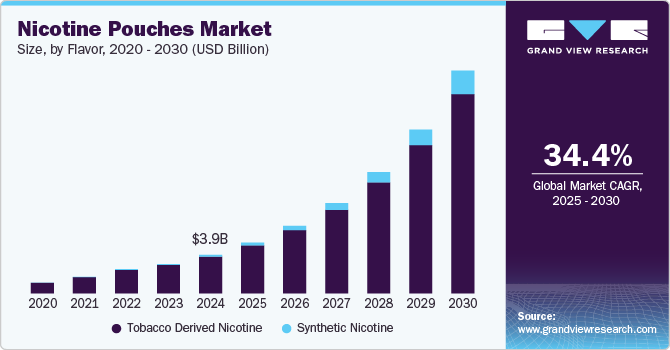
The North America nicotine pouches market accounted for a revenue share of 79.8% in 2024. In the US alone, pouch sales have surged an astonishing 300-fold since 2016. We’re talking about a multi-billion-dollar opportunity that's still in its very early innings.

Industry titans have already staked their claim. Market leader Zyn, now owned by Philip Morris, commands a staggering >50% share of the US market, selling over 384 million cans worldwide in 2023.
Rival Velo, British American Tobacco's key offering, is hot on its heels, with volumes soaring 56% in 2024 following the launch of its Velo Plus line.

As a consumer, I can tell you firsthand that the appeal of these products is real. At around $6 per can, my own ~1 can per 2 day Zyn habit costs me roughly $1,095 per year.
That might sound steep, but for a smoke-free, spit-free, odor-free nicotine experience, it's a price millions of consumers are clearly willing to pay.
So what's driving this explosive growth? In my view, it comes down to a perfect storm of factors:
Harm reduction. Nicotine pouches offer a cleaner, healthier alternative to traditional cigarettes and dip. In a world that's increasingly prioritizing wellness, they're the logical choice for smokers looking to kick the habit without giving up nicotine entirely.
Convenience and discretion. Pouches are incredibly easy to use and transport, with no need for lighters, ashtrays, or frequent trips outside. They're also virtually invisible when in use, making them ideal for consuming nicotine in social or professional settings where smoking would be frowned upon.
Flavor innovation. Pouch makers have cracked the code on flavor, offering a dizzying array of options from classic mint to exotic fruit blends. The ability to customize your nicotine experience has been a game-changer, attracting a new generation of consumers who value choice and variety.
Pricing power. The compact, premium nature of pouches allows brands to command strong pricing and margins. Consumers have proven willing to pay a premium for a superior product, creating a lucrative market opportunity for manufacturers who can differentiate on quality, flavor, and branding.
From an investment perspective, I see enormous potential not just in the pouch brands themselves, but in the broader ecosystem of suppliers and distributors.