


Let me start with a controversial statement: Trump loves the stock market more than most people love their kids.
I know, I know. But hear me out…
You can see it in how he talks. He doesn’t treat the economy as something to manage or nurture. He treats it like a scoreboard. If the numbers are green, it’s proof of genius. If they’re red, it’s someone else’s fault—the Fed, China, or whoever happened to annoy him that morning.
Most presidents talk about the economy in terms of policy. Trump talks about it like a degenerate watching his portfolio during power hour. Every tick matters. Every headline becomes personal. Every red candle is an attack on his legacy.
This isn’t hyperbole. It’s observable market psychology that’s been playing out for years.
This week gave us another masterclass in Trump-style market manipulation (the legal kind, apparently).
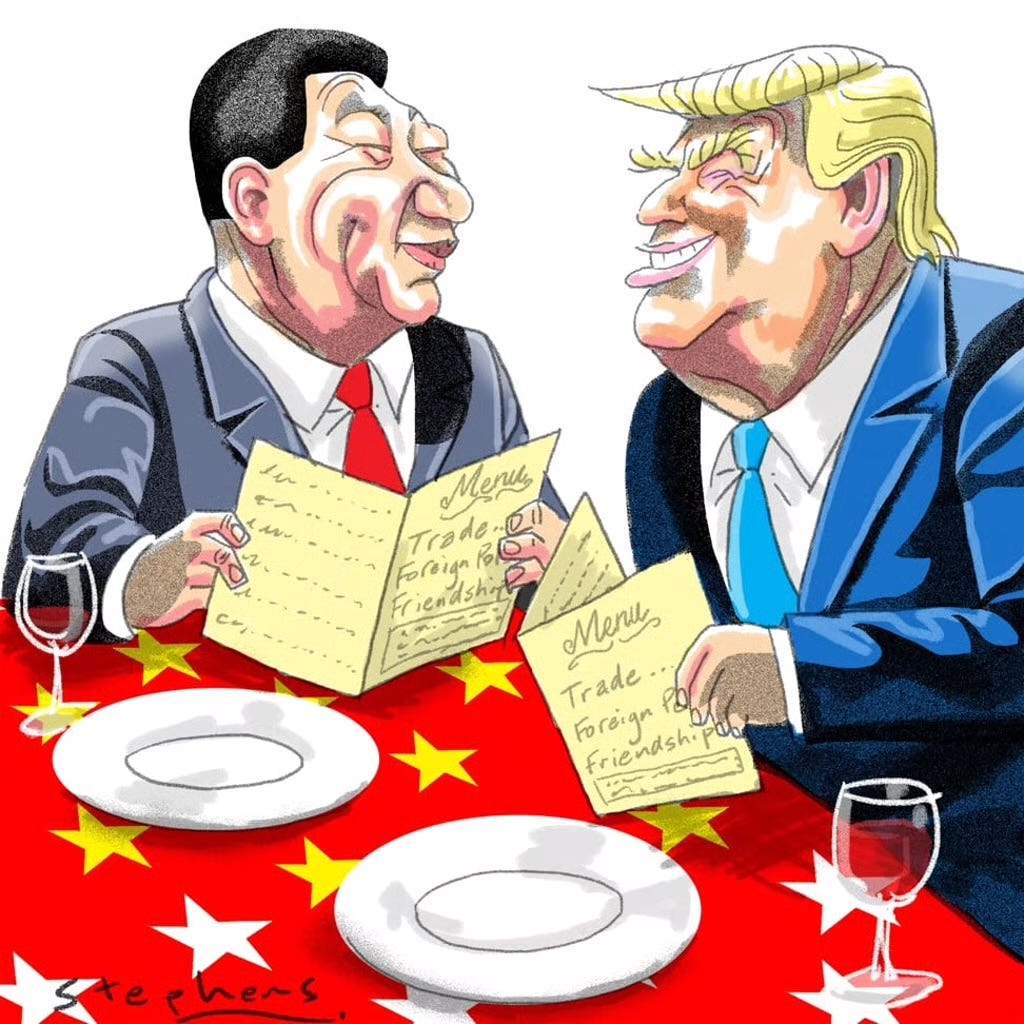
Speaking to Republican senators at a White House lunch, Trump said he expected to “seal a good deal” with China’s President Xi Jinping at the upcoming APEC summit in South Korea—their first in-person meeting since his return to office. Then, without taking a breath, he completely undercut himself:
“Maybe it won’t happen. Things can happen where, for instance, maybe somebody will say, ‘I don’t want to meet. It’s too nasty.’ But it’s really not nasty.”
Three market signals in one sentence. Bullish, bearish, then weirdly reassuring.
Next day, headlines drop about software export curbs on China. Markets wobble. And somewhere, Trump’s watching futures, planning his next move.
This isn’t chaos. It’s choreography.
During his first term, the pattern was clockwork. Monday morning: “China is ripping us off!” Markets dip. Monday afternoon: “President Xi and I are great friends.” Markets recover. By Wednesday: “Best economy ever!” New highs.
He once said “Everybody’s rich” because stocks were up 50%. Never mind that half of Americans don’t own stock. In his mind, green screens equal winning, and winning equals Trump.
He even told people if he lost or got impeached, the market would crash. Not as analysis. As a threat. Or maybe a promise. But it showed everything—the market isn’t just an indicator to him. It’s personal.
That creates what I call the Trump Put. Not a real Fed backstop, but something almost stronger: the belief that Trump won’t let markets fall far before he does something. A tweet, a reversal, whatever it takes to turn red into green.
Think about it. When someone pathologically can’t tolerate a down market and has the world’s biggest megaphone, dips become buying opportunities. Not because of fundamentals. Because you’re betting on Trump’s psychology.
The first time I really noticed it was 2018. Markets were selling off on trade-war headlines. Trump went from “trade wars are good, and easy to win” to praising Xi within days, then back again—so predictably that traders stopped parsing policy and started trading his mood swings.
Is this good policy? No. Is it sustainable? Hell no. Eventually earnings matter. Math matters. You can’t tweet away a recession.
But day-to-day? Understanding that Trump sees red days as personal insults might be your edge.
When the next China or any type of tariff headline drops and futures crater at 3 AM, wait twelve hours. Check Truth Social. Look for “talks going well” or “China wants a deal.” Then ask: is this actual news, or just Trump unable to stomach red on his scoreboard?
The Trump Put works because everyone knows it exists. We all know he’ll try to pump markets. We all trade accordingly. The pump often works. Self-fulfilling prophecy powered by collective cynicism.
Last time around, smart money bought every Trump-induced dip and sold every peace-talk rally. Rinse, repeat, compound. While CNBC clutched pearls about “unprecedented volatility,” traders who understood the game cleaned up.
Look, I’m a value investor. I like boring companies with steady cash flows. But I’m not stupid enough to ignore the biggest market participant when he’s showing exactly how he’ll behave. When someone treats the Dow like their personal approval rating, you can trade that.
The media calls it chaos. Trump calls it negotiating. I call it an opportunity if you understand the rhythm.
He’s not managing an economy. He’s managing a scoreboard. And he hates losing more than anything.
So next time futures tank on some Trump trade war comment, remember: you’re not watching policy. You’re watching a man who can’t sleep when his numbers are red. He’ll do something about it. He always does.
The difference between his first term and now? Everyone knows the playbook. The question is whether the trade still works when everyone’s running it.
My guess? As long as Trump watches futures like a day trader watches OPEN or BYND, the Trump Put lives on. Because in the end, this isn’t about economics or policy or global trade.
It’s about a man who needs the market to love him back.
And that’s the most tradeable thing in the world.
If you liked this one, you’ll probably enjoy my earlier post too:

Talking about the Trump Put, Ferrexpo stock (a producer of iron pellets in Ukraine) is constantly swinging +-10% depending on how Trump wakes up or who he talks to regarding the war. I have been watching the stock without owning it because it is a highly speculative bet on the end of the war (which I am not confident will end soon) and waiting for the right time to start buying. In hindsight it proved a bad decision to wait instead of just buying, because while I was right in every call that Trump would not end the war, I "could" have traded every up and down. I have even thought about buying just because of how predictable Trump is going to be in making announcements, but if he gives up on the subject, it is a slow decline from there until Putin dies, a rebellion starts inside of Russia or Russia eventually gives up (unlikely).