


The 10-year Treasury yield has gone from 4.79% at the beginning of September to around 5.3%. The 30-year has traded above 5.6%. Those are levels we haven’t seen since 2007 and 2002, respectively, and it’s been a pretty relentless move higher over the past few weeks.
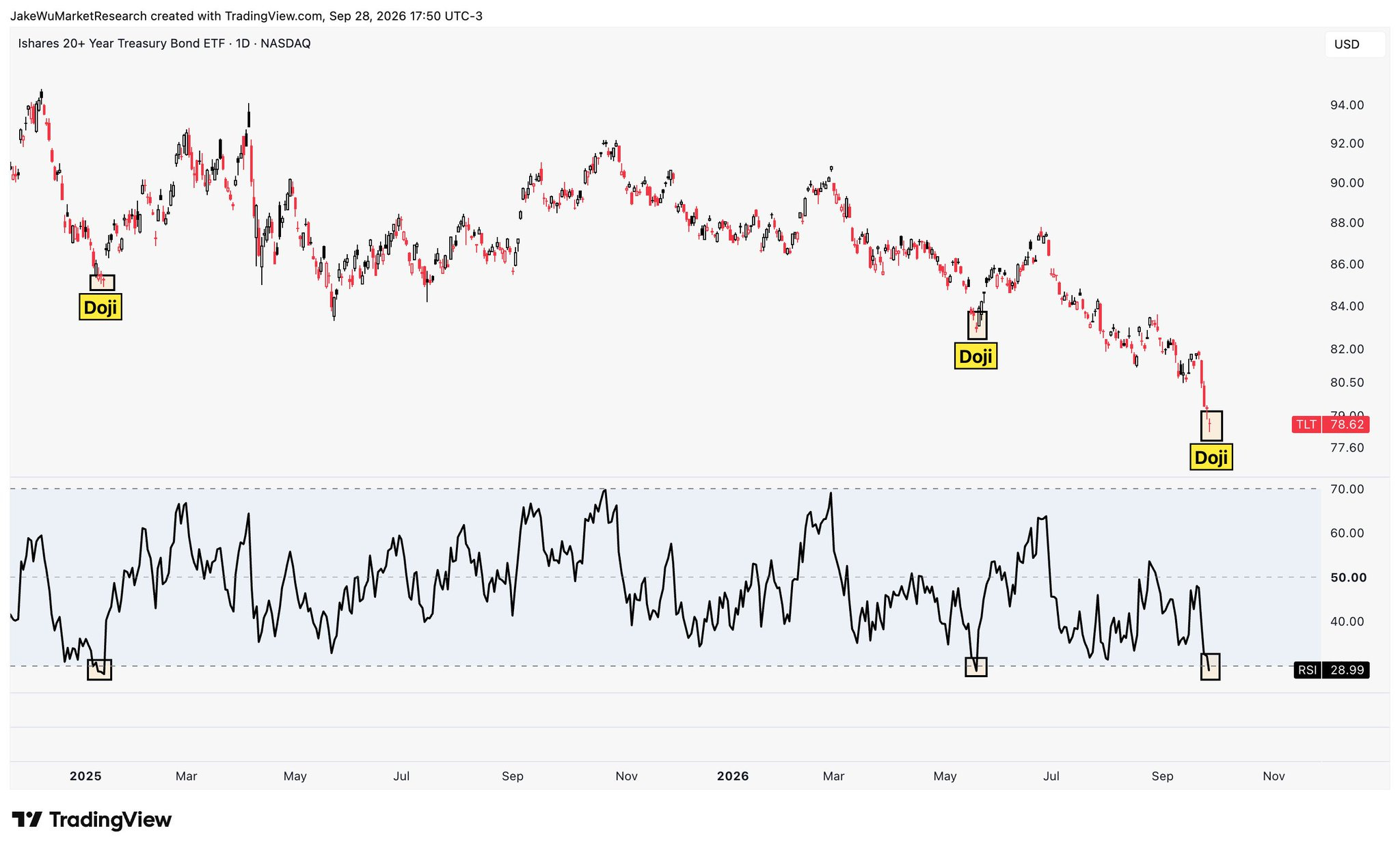
You can see it in TLT below, the 20+ year Treasury bond ETF. Lower prices mean higher yields, and that latest leg down has been especially ugly.
Now I’m usually a little skeptical of lining up today’s chart with some point in the past and expecting the same thing to happen again. You can probably find a similar-looking chart for almost anything if you go back far enough. But I have to admit, the move into the 2018 midterms looks a lot like what we’re seeing now, especially the way yields accelerated heading into October.
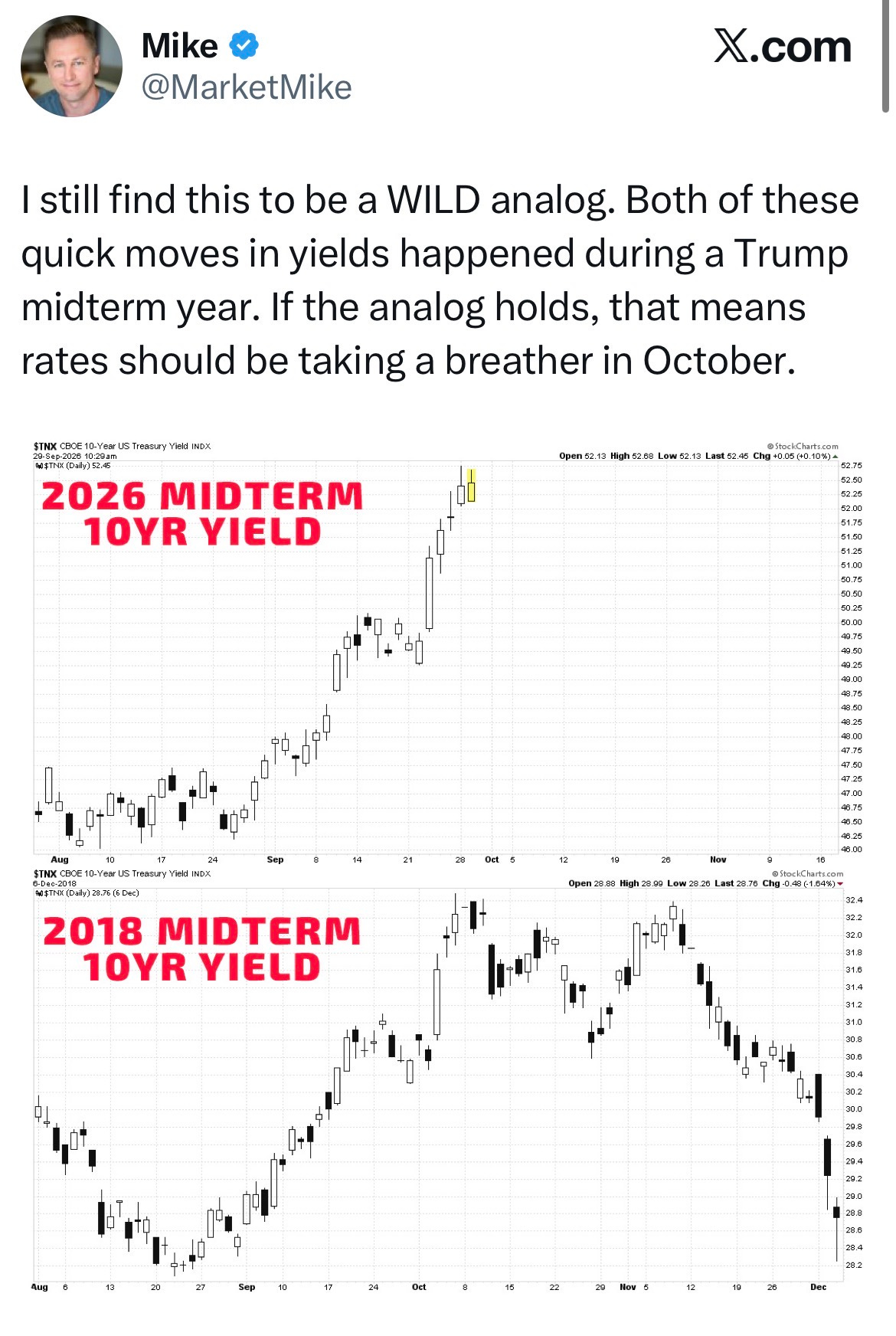
I wouldn’t try to pick the exact top from that, but I’m starting to think we’re getting closer to a near-term peak here.
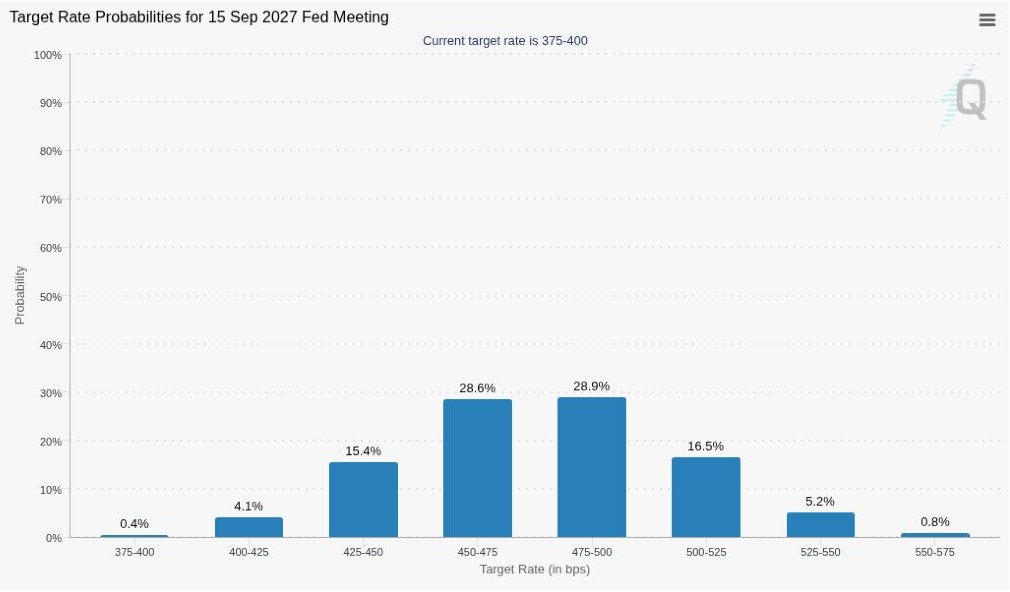
The market is now pricing in roughly four more quarter-point Fed hikes over the next 12 months. Another full percentage point from here seems excessive to me, especially after how much borrowing costs have already risen.
If some of those hikes come back out of expectations, yields could come down (bond price UP) quite fast especially from such an over sold level. We saw how quickly things can turn in late 2023, when the 10-year went from around 5% in October to below 4% by December and stocks recovered from a pretty unpleasant few months.
What I find remarkable is how well the major indices have held up through all of this. Yields have been rising, oil has been rising, and the indices are still hanging around their highs. Plenty of individual stocks have had a much rougher time, which is why the index level on its own doesn’t feel like a very good description of this market. Still, I would have expected more damage given the moves we’ve had in rates and oil.
I think growth helps explain some of that resilience. There’s a lot of investment taking place and demand for the capital to finance it. Companies have a better chance of handling higher rates when their revenues and earnings are growing alongside them. That’s why I’m less concerned about a repeat of 2022, when inflation was running away from the Fed and policy was trying to catch up.
There’s also something in the bond market that gives me a little more reason to think that, although I don’t want to overstate it. So far this month, the increase in the 10-year yield has been almost entirely matched by the increase in its inflation-adjusted yield. The gap between them, a rough measure of the inflation compensation investors are demanding, has barely changed.
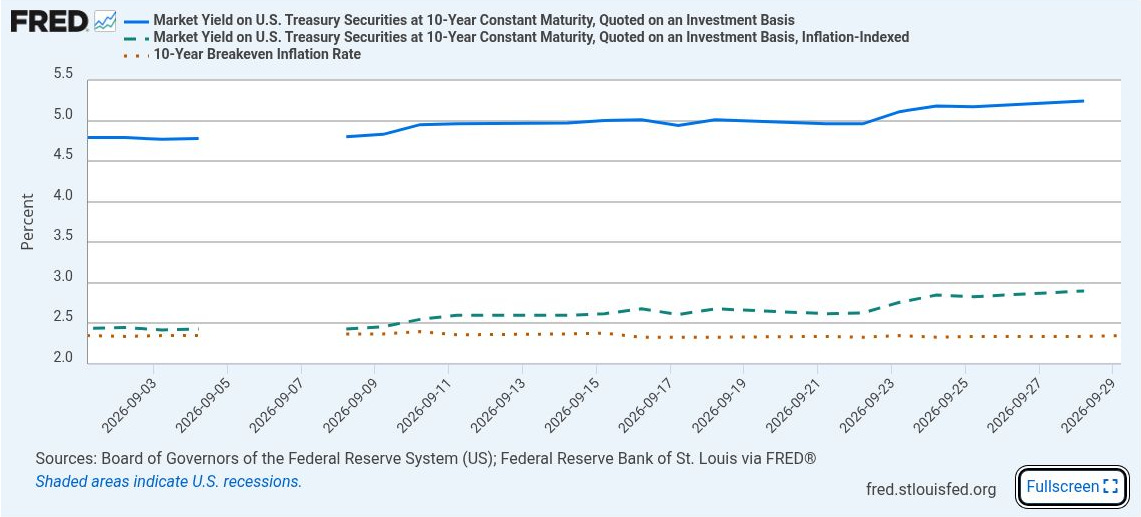
That doesn’t prove the whole move is about growth. More government borrowing and investors demanding a higher return to hold long-term bonds can push yields up too. But it makes me less convinced that every new high in yields should be read as another warning about the longer-term inflation outlook.
So I’m thinking about what happens if growth remains decent and the market ends up needing fewer hikes than it currently expects.
Even a period where yields settle around these levels could help. Businesses would still have to deal with higher financing costs, but investors could get more comfortable valuing them without having to keep revising their assumptions about rates.
Small caps and rate-sensitive consumer names are obvious places to look. TLT and IWM are worth watching together here. TLT owns long-term Treasuries, so rising yields generally hurt its price. Small caps can come under pressure alongside bonds when higher financing costs and weaker risk appetite are driving the selloff. Some relief in bonds could help both, provided the economic outlook holds up.
I’d also expect a friendlier environment for emerging markets, particularly if the dollar softened.
For my own portfolio, Alibaba and Shift4 are two names where I’d welcome some improvement in risk appetite. Both have plenty going on within their own businesses, but a more stable rates environment could make investors more willing to pay for their future earnings.
Of course, 2018 is also a pretty good reminder that falling yields don’t automatically mean rising stocks. Equities had a rough end to that year even as yields came down. If yields fall because the economy is falling apart, I’d be much less optimistic about stocks. I’m thinking about a scenario where growth holds up and some of the expected tightening proves unnecessary.
And in that scenario, I think the major indices could have a face-ripping rally too. They’ve already absorbed a substantial increase in yields. If earnings keep growing and the pressure from rates eases, I could see the broader market going considerably higher, with some of the names that have been left behind finally getting a better response.
Disc. Long BABA and FOUR.
Disclaimer: This article is for informational purposes only and does not constitute investment advice. Always do your own due diligence before making investment decisions.