


Ahead of February’s official earnings release, Alibaba held pre-earnings guidance calls with major sell-side institutions. A contact of mine was on the Citi-hosted call and was kind enough to share his notes with me.
I wasn’t planning to write anything up until a similar call with the Hong Kong sell-side leaked to local Chinese media a few days later.
Below is a partial transcript of what was shared/leaked. Courtesy of DZ.
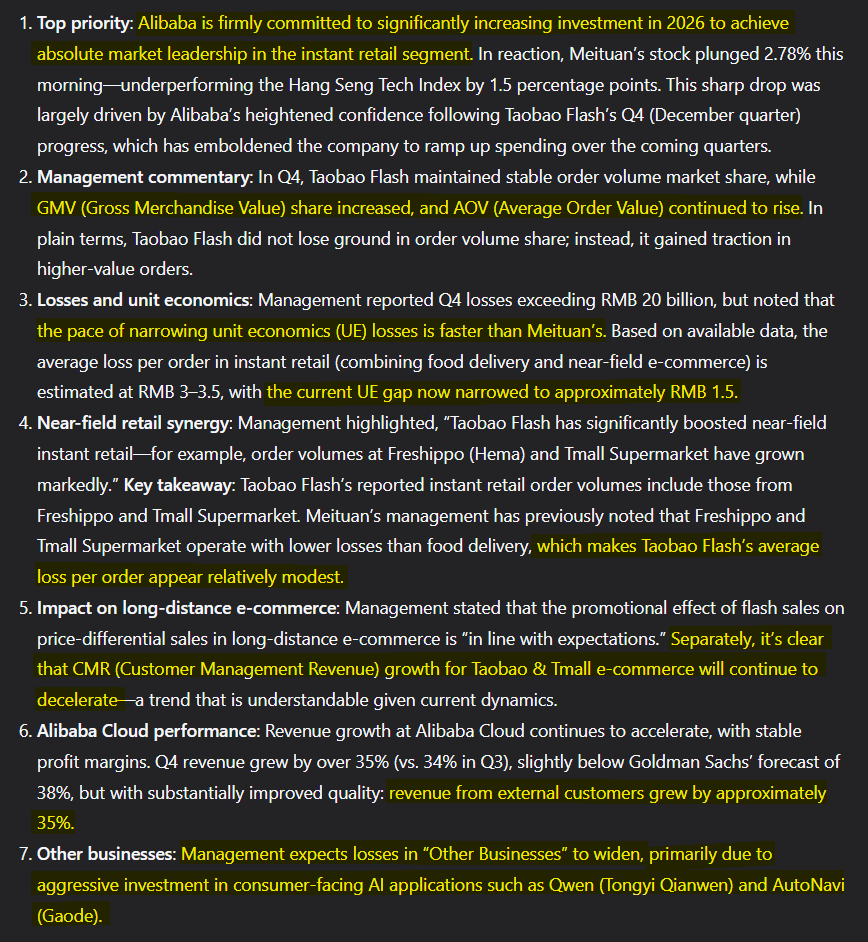
Both calls covered the same ground and the tone was aggressively negative. Almost suspiciously so.
Cloud growth? Lower your estimates. E-commerce? Slowing materially. Buybacks? Don’t count on them. Quick commerce losses? Not narrowing anytime soon.
I don’t buy it.
I’ve been following this management team for over three years now. They’ve bought back a ton of stock. They held their ground in e-commerce when everyone thought PDD was going to eat them alive. They’ve gone all-in on AI.
The stock has slowly started to re-rate because of it and they’ve earned my trust. None of this happens under prior management. Those guys were terrible.
So when they started pouring money into quick commerce and the stock got punished for it, I figured they knew something the market didn’t. Now they’ve got 40-50% share in under a year.
And just as they hit scale, regulators step in to end the subsidy wars. Funny timing.
And now this pre-earnings doom and gloom. Look, maybe they really are worried. But I think it’s the same playbook. Set expectations low, step over them. I could be totally wrong here. I don’t think I am though.
As far as I know, the leaked transcript only gave part of the picture. I want to share everything management said and everything I know from the call. Then we’ll get into why I think it’s sandbagging, and why the regulatory news is actually good for Alibaba.
Management is Managing Expectations
Management proactively addressed what they called “investor misunderstanding” around quick commerce losses.