


Alibaba has had yet another ugly week, and I think the selling is starting to get pretty ridiculous…
The stock finished Friday under $95/share, down almost 14% for the week. Thursday alone took 7% off the shares. We got about two cents back on Friday, so I’ll try not to get too excited.
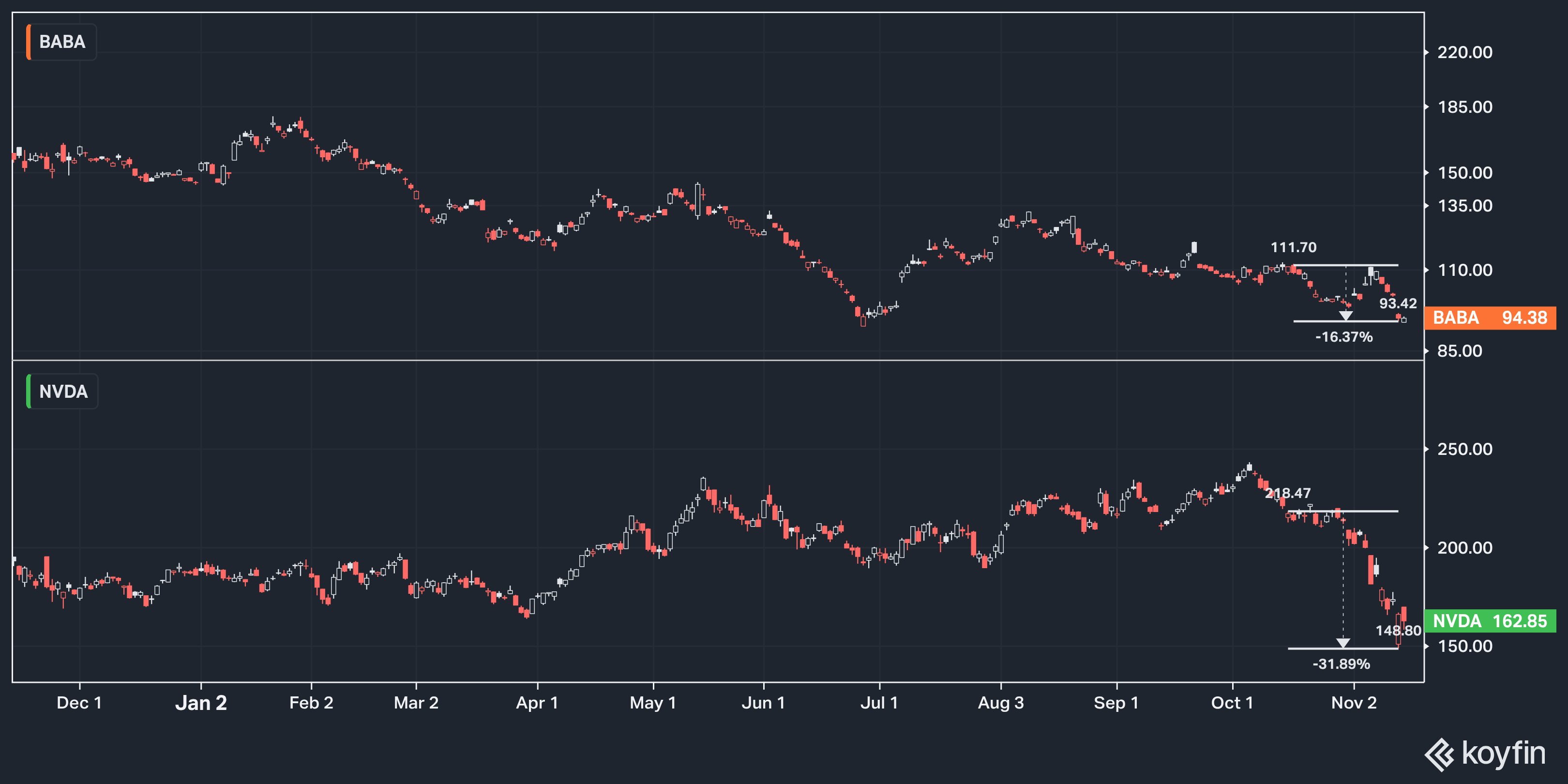
The latest concern is the Nvidia mess and what it could mean for Chinese companies getting access to advanced chips. Jensen Huang is out, there’s more political pressure around Nvidia’s business with China, and Washington is reportedly preparing tighter restrictions on Chinese companies renting computing power overseas.
Alibaba does have a connection here. The Financial Times reports that it has been Megaspeed’s largest customer for its Southeast Asian cloud business.
Megaspeed supplies access to Nvidia-powered servers in overseas data centers, including Malaysia, and Alibaba reportedly rents that computing power. The hardware stays overseas while Alibaba accesses it remotely.
Company filings reviewed by Singapore’s press show that Megaspeed’s Malaysian subsidiary pledged equipment and other assets to an Alibaba subsidiary under a financing arrangement dating back to 2024. We still don’t have the full picture of the contracts or how much computing power Alibaba actually gets through this relationship, though.
Losing access to that capacity could create delays and extra costs. But being Megaspeed’s biggest customer tells us very little about how dependent Alibaba is on Megaspeed. Those are two different things, and I think people are getting a little ahead of themselves assuming this puts the whole cloud expansion in trouble. I’d like to know how much capacity is actually at risk before making that jump.
And none of this should be a particularly new concern for Alibaba…
Restrictions on Nvidia chips have been hanging over Chinese tech for years. The rules keep changing, access keeps getting more complicated, and every few months there’s another argument about what China should or shouldn’t be allowed to buy.
I find it very hard to believe Alibaba has been spending all this money while assuming Washington would eventually become easier to deal with.
They didn’t need to predict this particular scandal to prepare for more restrictions. I’d expect a company in Alibaba’s position to have been planning around that possibility for a long time. Looking at what they’ve actually been building, I think there’s pretty good evidence they have.
T-Head is the obvious example.
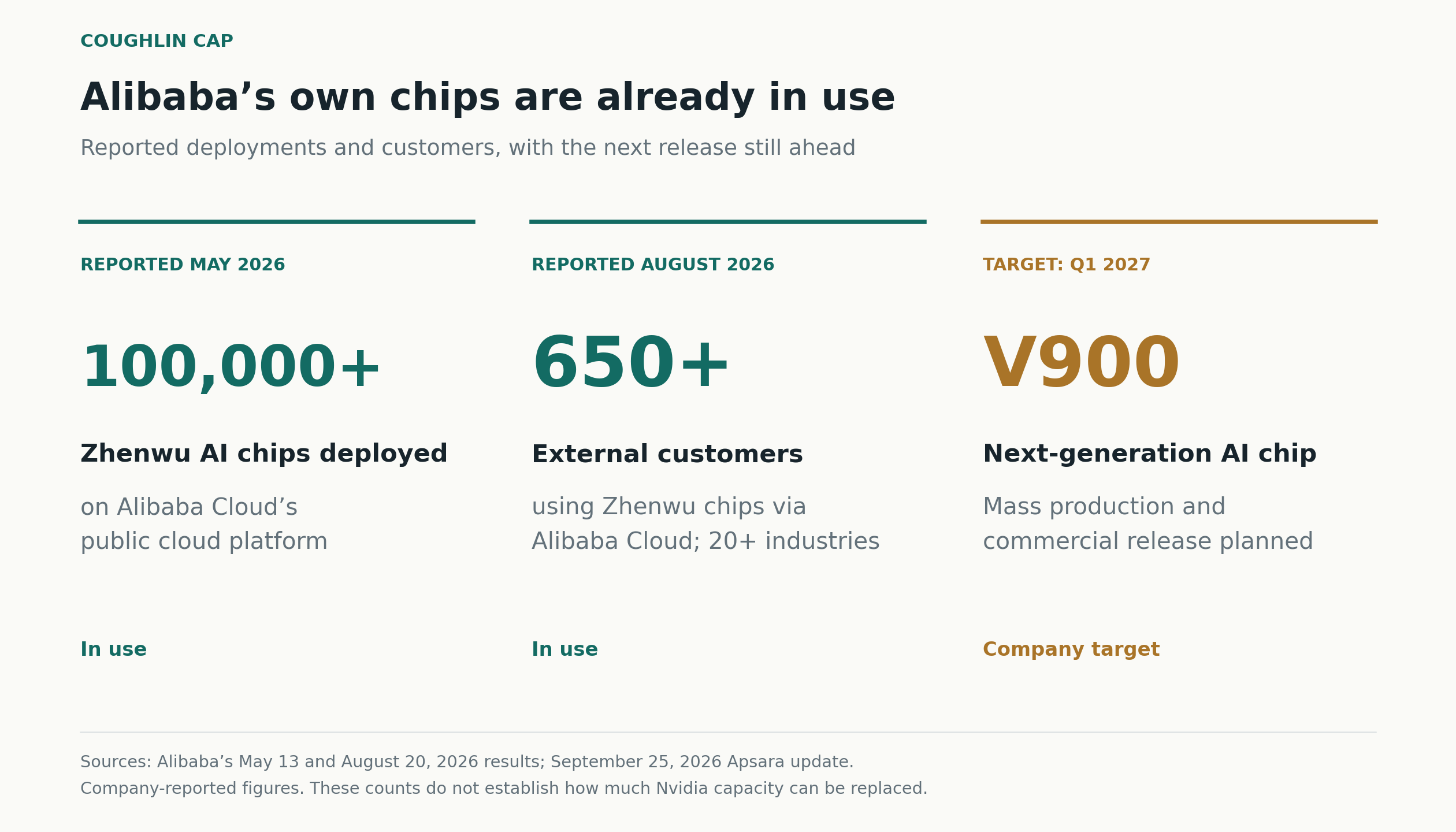
In its May results, Alibaba said more than 100,000 of its own Zhenwu AI chips had already been deployed on its public cloud. By August, it was reporting more than 650 external customers using those chips across over 20 industries.
These chips are already being used for training models and running them for customers. Alibaba also has its next chip, the V900, scheduled for commercial release in early 2027.
Of course they’d still like more Nvidia chips. I’m sure they’d take plenty of them if they could. Nvidia being the preferred option doesn’t make everything Alibaba is developing itself useless.